How to Choose the Best Cooking Range for Your Kitchen Needs?
Choosing the right Cooking Range can significantly enhance your kitchen experience. A study by the National Kitchen and Bath Association shows that 78% of homeowners plan to upgrade their cooking appliances. This statistic highlights the importance of selecting a Cooking Range that meets both your culinary needs and aesthetic preferences.
When evaluating options, consider factors like fuel type, size, and features. Natural gas or electric options offer different benefits. For example, gas cooks faster, while electric ranges provide even heat. Many users struggle to find a balance between functionality and design. You might prioritize performance over style, or vice versa, causing uncertainty.
Moreover, it’s essential to assess your cooking habits. Do you frequently host large gatherings or enjoy cooking gourmet meals? The right Cooking Range should align with your lifestyle. Ultimately, making an informed choice involves balancing these many aspects. Each decision can impact your daily cooking routine and overall satisfaction.
Understanding Different Types of Cooking Ranges Available in the Market
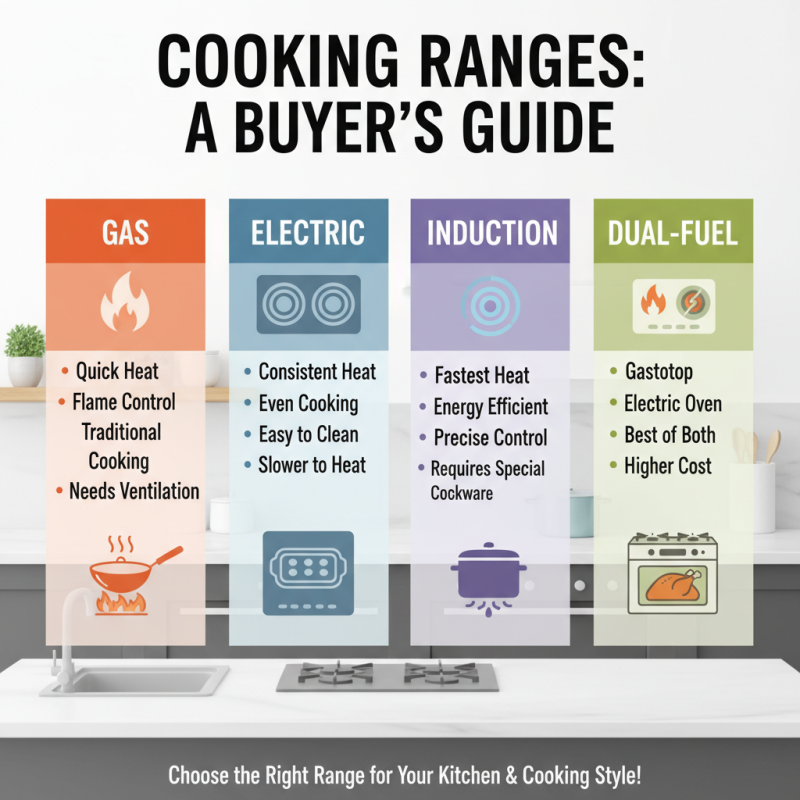
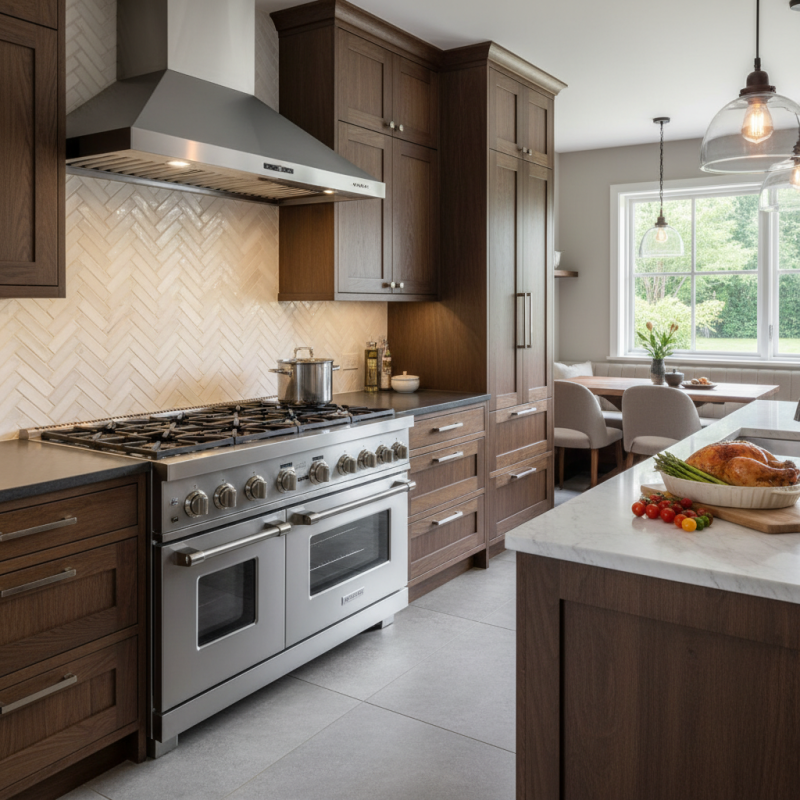
When choosing a cooking range, understanding the types available is crucial. You can find gas, electric, induction, and dual-fuel ranges. Gas ranges offer quick heat and flame control. They create a traditional cooking experience. However, they need proper ventilation, which may not suit all kitchens.
Electric ranges provide consistency in temperature. They are easy to clean and often come with sleek designs. Yet, they can take longer to heat up and cool down. Induction ranges offer fast cooking through magnetic technology. They heat pans directly, making them energy-efficient. However, you need compatible cookware for optimal performance.
Dual-fuel ranges combine the benefits of gas and electric. They are versatile and appeal to many chefs. But, they tend to be more expensive. Reflecting on your cooking style and kitchen layout is important. Consider your needs and space constraints. A well-chosen range can enhance your cooking experience significantly.
Evaluating Your Cooking Style and Frequency: Key Considerations
Choosing the right cooking range starts with understanding your cooking style. Do you often prepare elaborate meals or simple weeknight dinners? A keen self-assessment can clarify your needs. For example, if you usually cook for a large family, a range with multiple burners and spacious oven capacity is crucial. But if you mainly whip up quick breakfasts, you might need less.
Frequency of cooking also plays a role. If you cook daily, durability and ease of cleaning should be priorities. However, if your cooking is limited to weekends, versatile features might be more appealing. It's easy to overlook these details when shopping. You could end up with a range that looks good but lacks practicality. Reflect on your habits. Do you grill often or opt for baking? These details should guide your choice.
Assessing Kitchen Space and Layout for Optimal Range Placement
When assessing your kitchen space, start by measuring the area where the cooking range will go. A compact kitchen needs careful planning. You want to ensure enough space for movement around the range. Consider where cabinets and appliances sit. If the layout is too tight, cooking can become a hassle.
Placement is key for functionality. Think about how you'll access your range. Is it near prep areas? Is it easy to reach other appliances? Lighting also matters. Ensure good lighting at the cooking station. Poor lighting can lead to accidents.
One common mistake is ignoring ventilation. A range needs proper exhaust. If it’s placed near a corner, smoke might linger. Take time to visualize how everything fits. Sometimes, rearranging other elements can optimize your space. Reflection on layout can lead to a more enjoyable cooking experience.
Choosing the Best Cooking Range for Your Kitchen Needs
This bar chart illustrates the popularity of various cooking range sizes based on customer preference. The 30-inch size appears to be the most favored, followed by 36-inch and 48-inch ranges, highlighting trends in kitchen space utilization.
Comparing Fuel Types: Gas vs. Electric vs. Induction Cooking Ranges
When it comes to choosing a cooking range for your kitchen, the type of fuel you use makes a big difference. Gas tends to heat quickly and offers precise temperature control. Many chefs prefer it for its responsiveness. However, gas ranges require ventilation, and installation may involve extra costs.
Electric cooking ranges are typically easier to install. They provide uniform heat distribution. Yet, they can take longer to heat up. Cleaning can also be a hassle if spills occur on the smooth top. Sometimes, the heating elements can be finicky.
Induction cooking ranges are gaining popularity. They use magnetic fields to heat cookware directly. This method is efficient and safe, as the cooktop remains cool. However, induction ranges require compatible cookware. Many people overlook this detail.
Tips: Consider your cooking habits before deciding. If you cook often, invest time in learning about each type. Think about your kitchen layout. Reflect on what fits your space best. Don’t rush the choice; each option has trade-offs.
How to Choose the Best Cooking Range for Your Kitchen Needs?
| Fuel Type |
Efficiency |
Heat Control |
Installation Cost |
Operating Cost |
Safety |
| Gas |
High |
Immediate |
Moderate |
Low |
Moderate |
| Electric |
Medium |
Slow |
Low |
Medium |
High |
| Induction |
Very High |
Very Immediate |
High |
Medium |
Very High |
Budgeting: Balancing Features and Cost for Your Ideal Cooking Range
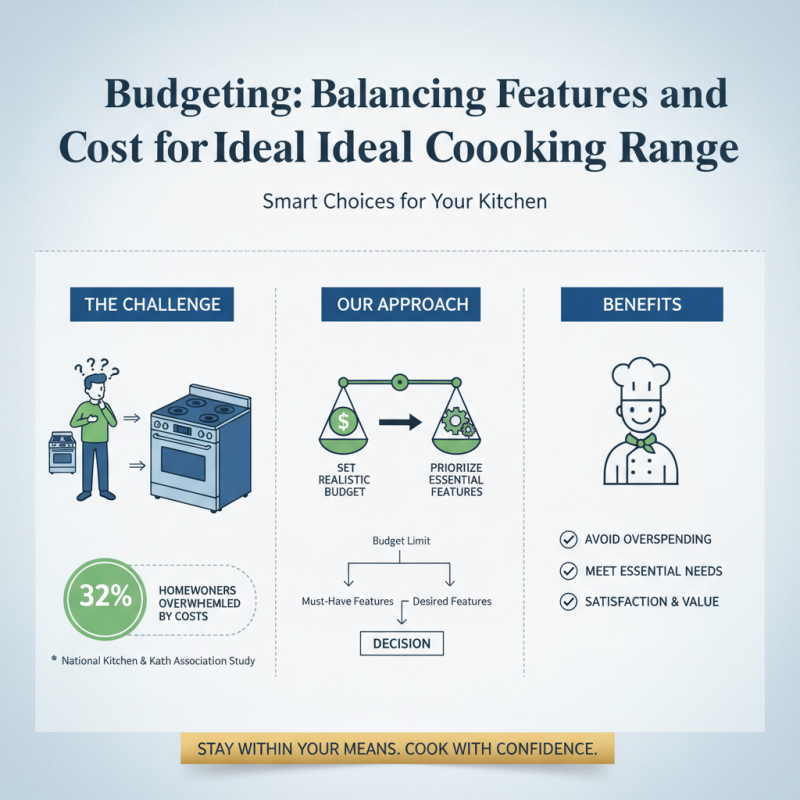
When choosing a cooking range, budgeting is crucial. A study from the National Kitchen and Bath Association reveals that 32% of homeowners feel overwhelmed by costs. Balancing features with budget can lead to better decisions. It's vital to set a realistic budget to avoid overspending but still meet essential needs.
Consider the key features you require. A dual-fuel range might seem appealing, but it often comes with a higher price tag. Gas ranges typically start around $750, while electric can be found for as low as $500. Proper planning allows shoppers to weigh cost against necessary features. Consulting online reviews helps clarify which features add real value.
Reflection is important during this process. Many buyers regret purchases due to impulse shopping. It takes time to research and compare products. Look for long-term savings in energy-efficient models. Sometimes, the cheapest option may not provide reliability, costing more in repairs. Balancing immediate gratification with future needs is a challenge worth tackling.